Emotion-Aware Sleep Support System for Children
Conceptual affective computing system using AR and multimodal sensing to detect and reduce nighttime fear in children.
Duration
6 weeks
Tech Stack




Project Overview
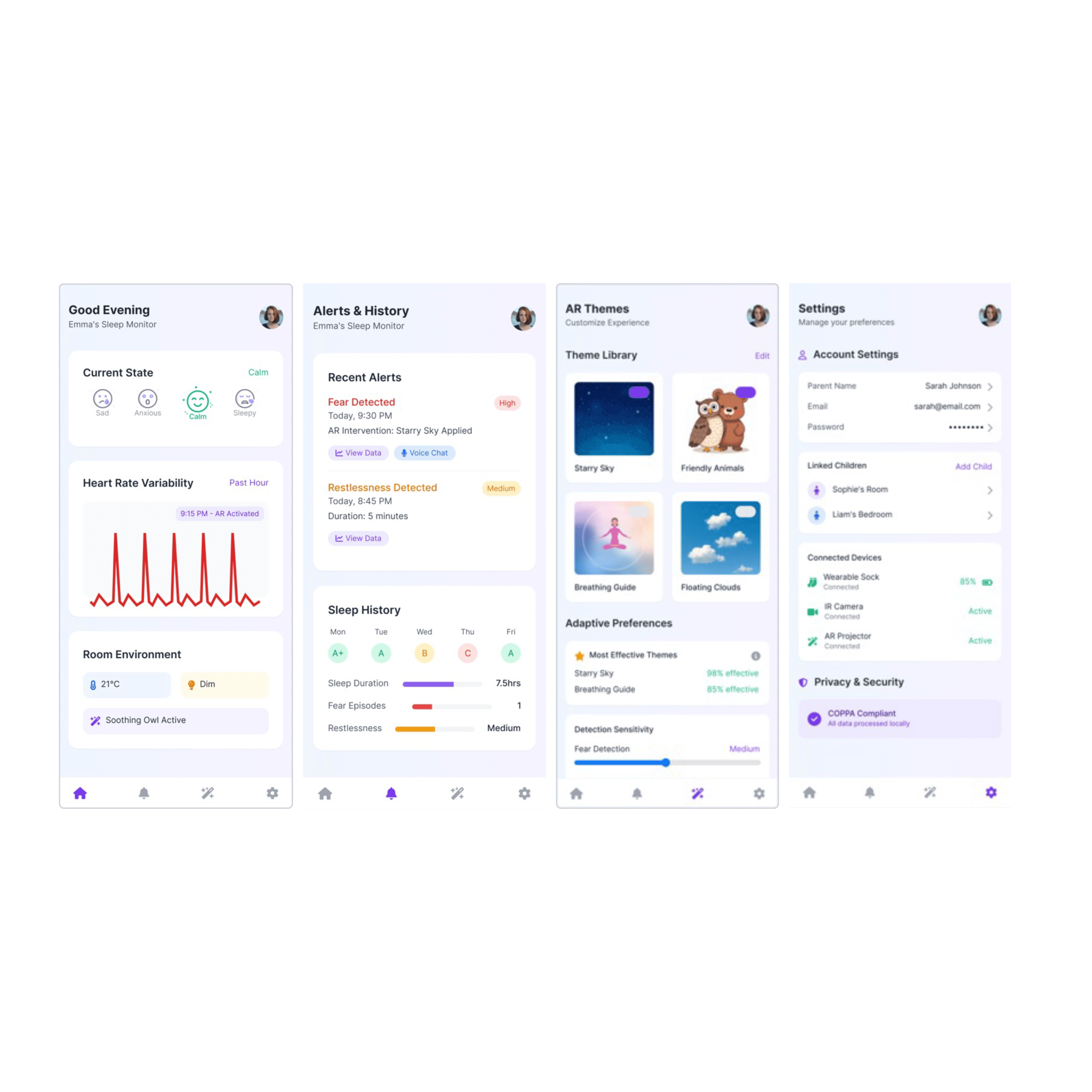
This project explores a conceptual emotion-aware system designed to reduce nighttime fear in children aged 3–8. The system detects emotional distress using physiological and behavioural signals and responds with calming augmented reality experiences. A companion parent app provides insights into the child’s emotional state, supporting collaborative comfort rather than passive monitoring. The focus was on interaction design, system architecture, and affective computing integration rather than full technical implementation.
Goals
Detect fear and anxiety in real time
Deliver adaptive AR calming interventions
Improve sleep quality and emotional regulation
Provide parents with meaningful emotional insights
Process
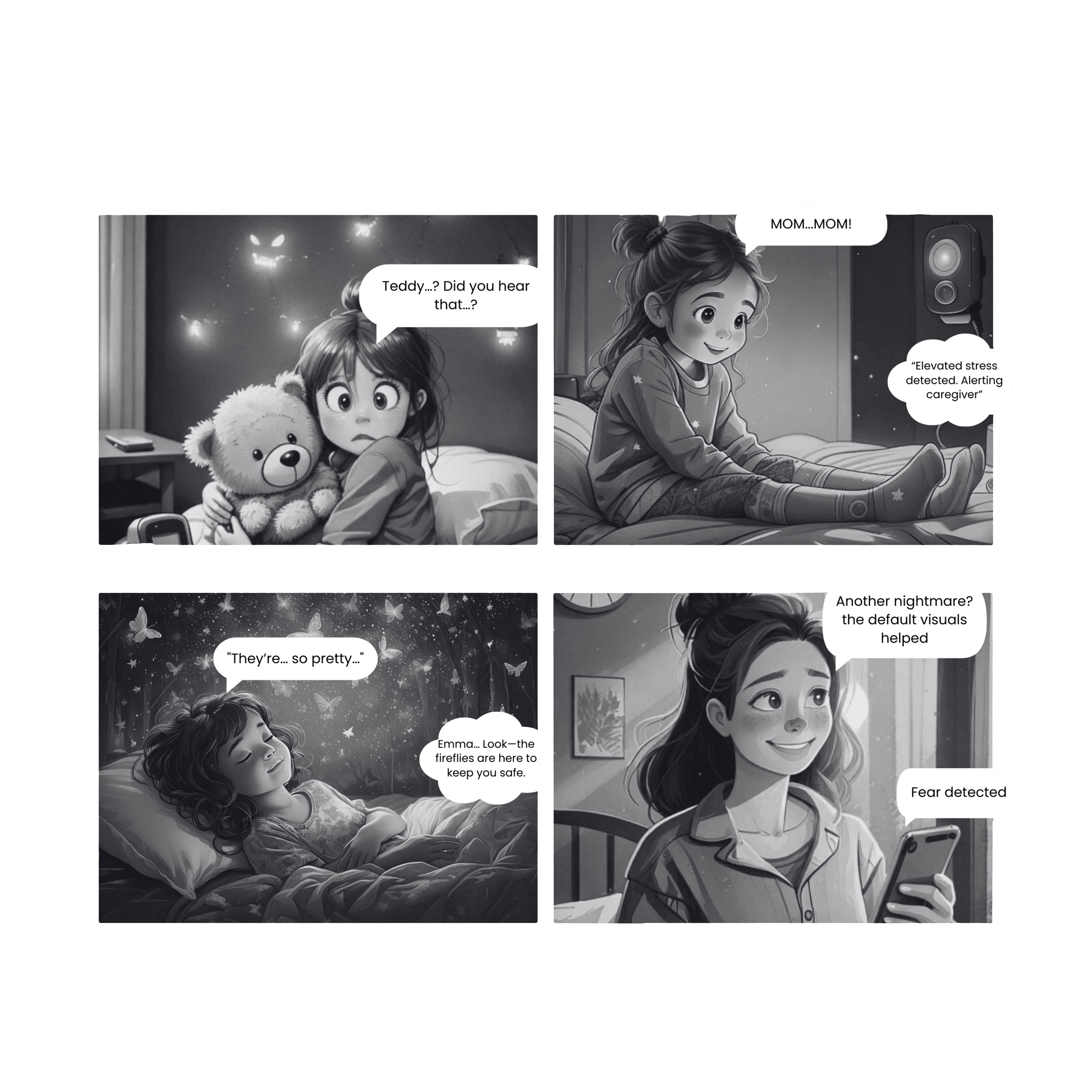
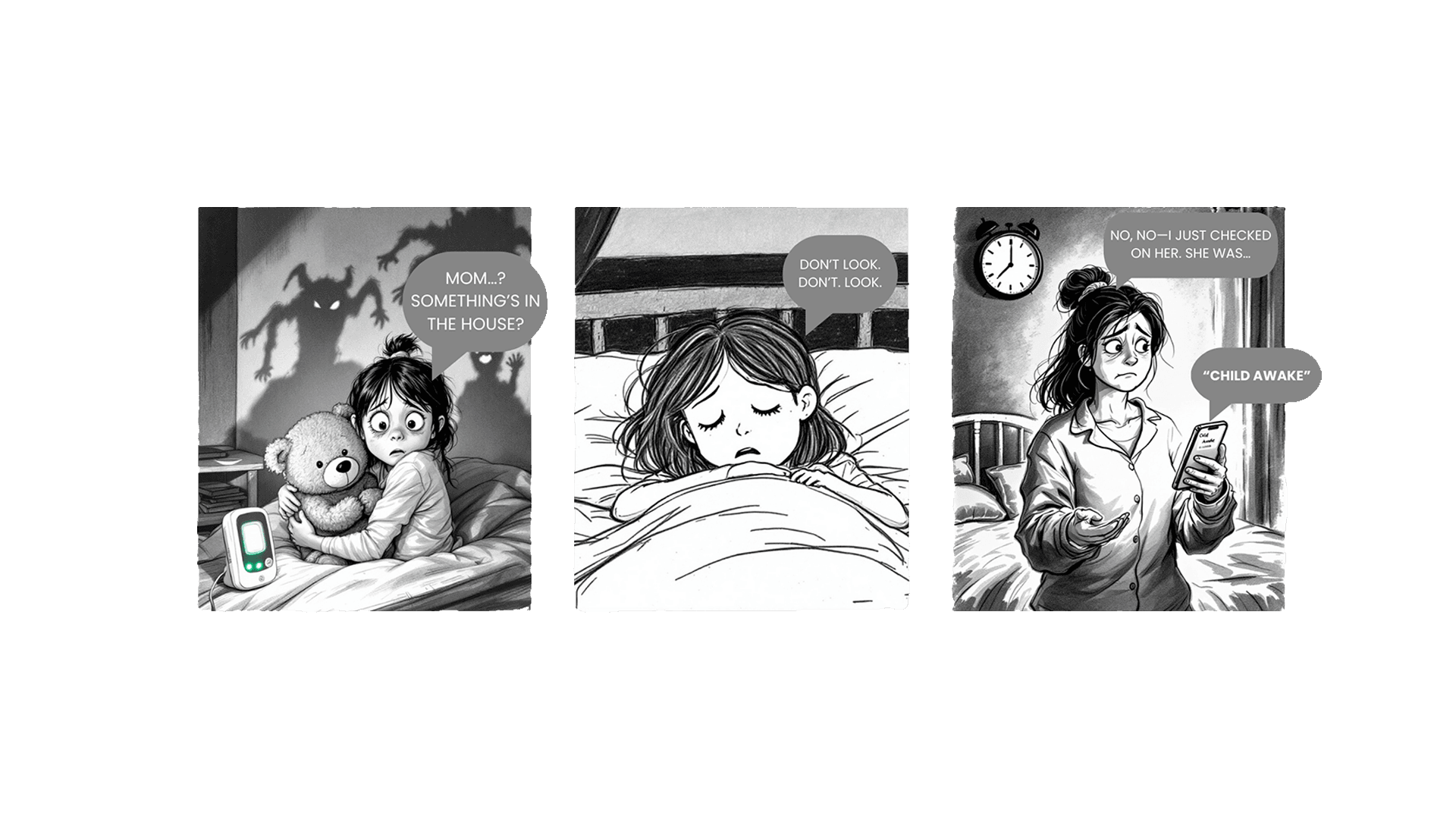
The project followed a research-driven HCI approach. I studied affective computing, child sleep psychology, and multimodal emotion recognition before developing system flows, storyboards, and interaction scenarios. I then designed conceptual prototypes of the parent dashboard and AR experience to demonstrate how sensing, AI interpretation, and AR feedback would work together.
Challenges
A key challenge was balancing accurate emotion detection with child comfort and privacy. The system needed to avoid intrusive monitoring while reducing false detections. A multimodal sensing strategy and privacy-first design approach helped address these concerns.
Outcome
The project demonstrates how affective computing and AR can create emotionally responsive environments. It highlights system-level UX thinking, multimodal interaction design, and ethical AI integration, showing how emerging technologies can support emotional wellbeing beyond traditional interfaces.